Wednesday, 11 July 2012

5th article, International.

Apple iPad gets dedicated Google+ app with Hangouts

Google also updates iPhone app with Events feature
July 11, 2012 03:08 PM ET
Computerworld - Google this week pushed out a dedicated Google+ app for the Apple iPad.
With the free app, which was designed specifically for the popular tablet computer, users can access and make changes to their Google+ update streams, profiles, friends Circles and account settings. It also lets people make comments, expand and reshare posts, and upload photos and videos directly from their iPads.
Before the new app was available, iPad users had to use the Google+ iPhone app on their tablets. It worked, but it didn't take advantage of the expanded tablet features. They also could use a mobile version of Google+ in Apple's Safari browser, but that wasn't ideal either.
One feature of the app that's getting a lot of attention is the ability to join a Google+ Hangout with a few friends or a group of users. Google also added the Hangout feature to its Google+ app for the iPhone.
 
"There's nothing like catching up with friends face to face," wrote Bradley Horowitz, a Google vice president, in a blog post. "Now you can start a video chat with up to nine friends anywhere, anytime with Hangouts on iPhone and iPad."
He added that to get started with a Hangout on an iPad or iPhone, users simply tap Hangout on the main menu, add friends and then tap Start.
"We'll ring their phones (if you want), and if someone misses the hangout, they can ring you back with a single tap," wrote Horowitz.
Also included in the Google+ app for the iPhone is a new feature called Events on Google+. The feature, which was announced late last month at the Google I/O developers conference in San Francisco, is designed to help users set up parties, reunions and other social functions. It includes tools for sending invitations and posting photos during and after the event.
"Post a comment, upload a photo or check out who's going," wrote Horowitz. "Your past event invitations are saved with all the photos and posts shared by your friends, so you can relive the party anytime you want."

4th article, International.

Facebook launches malware checkpoints for users with infected computers

New Facebook feature allows users to voluntarily lock their accounts and initiate malware scans
By Lucian Constantin
July 11, 2012 11:36 AM ET
IDG News Service - Facebook on Tuesday launched a feature that allows users to lock down their Facebook accounts and perform malware scans if they suspect that their computers might be infected.
Facebook already uses internal scanners to detect spam and malicious messages that might have been sent from user accounts hijacked by malware.
When found, such accounts are temporarily locked down and their owners are asked to go through a multi-step account recovery process that involves downloading and running a malware scanner called McAfee Scan and Repair.
The new "malware checkpoints" feature will allow users who believe their computers might be infected with malware to initiate the account lockdown procedure themselves and perform an antivirus scan for free.
Users will be able to choose to scan their computers with McAfee Scan and Repair, a run-once anti-malware scanner, or with Microsoft Security Essentials, a full-featured antivirus product that must be downloaded and installed.
"If you are concerned that your device may have been infected by malware, you can visit http://on.fb.me/infectedMSE or http://on.fb.me/infectedMcA to be self-enrolled in either our Microsoft Security Essentials or McAfee Scan and Repair malware checkpoints," Facebook's security team said in a blog post.
The malware checkpoint feature will allow users to act proactively and not wait for Facebook's automated scanners to identify a threat, the security team said.
If users choose the McAfee Scan and Repair checkpoint they won't be able to unlock their account until the malware scan, whose progress is displayed on Facebook's website, is complete.
However, if users choose the Microsoft Security Essentials option they must manually certify, by checking a box on the website, that they downloaded, installed and performed a scan with the antivirus program before their account is unlocked.
Mac OS X users will be presented with a link to a page on Apple's support website from where they can download security updates and malware removal tools released by Apple.
However, they can also separately download the free Sophos Anti-Virus for Mac Home Edition from the AV Marketplace that Facebook launched in April.
"We hope that by making our technology available to more users, on demand, will help all the people who use our service keep their data and devices secure," the Facebook security team said.

3rd article, International.

Broadband access 'must expand to include poor'

Smriti Mallapaty
22 June 2012 | EN | ES
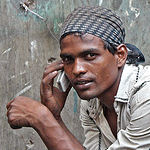
A man talks on a mobile phone/India
While mobile phones are now used all over the world, broadband's reach is much more limited
Flickr/Meanest Indian
[RIO DE JANEIRO] Some may argue that the digital divide is dead, but a new gulf — the broadband divide — is impeding poor countries' efforts to develop sustainably, a meeting on the sidelines of the UN Conference on Sustainable Development (Rio+20) heard this week.

Mobile phone technology is now firmly established. In a world of seven billion people, six billion mobile phones are currently in use.

But the broadband story is very different. Just four per cent of people in developing countries are subscribed to fixed broadband, compared with 25 per cent in developed countries.

In 2010, just five per cent of people in the developing world could access broadband on their mobile phones, compared with 42 per cent in developed countries, according to the International Telecommunication Union (ITU), the UN agency specialising in information and communications technology (ICT) development.

"Broadband is essential to fulfilling what has become a reality — that ICTs are fundamental to all three pillars of sustainable development [economic, social and environmental]," said Gary Fowlie, head of ITU's Liaison Office.

Broadband is a telecommunications signal that uses a wide range of frequencies, allowing for larger data flows and thus high-speed internet access. Many developing countries currently lack either the necessary fibre-optic and wireless networks, or cannot afford access to international submarine cable and satellite services.

Investing
in broadband infrastructure would have spillover benefits for all pillars of sustainable development — for example, by spawning programmes in e-agriculture, e-health, and e-education — and would spur economic growth, said Fowlie. 

A ten per cent expansion of broadband networks could lead to a 1.38 per cent growth in GDP (gross domestic product) in low and middle income countries, reported the Broadband Commission for Digital Development, which was set up in 2010 by the ITU and UNESCO (the UN Educational, Scientific and Cultural Organization).

In advance of Rio+20, the commission presented a 'call to action' to include broadband as a sustainable development goal.

But others argued this week that barriers to sustainable development would be better overcome by addressing the growing gap in knowledge regarding use of ICT services.

Nitin Desai, former under-secretary-general in the UN Department of Economic and Social Affairs, told the meeting that cultivating capacity to apply new and emerging technologies was critical to achieving desired sustainable development outcomes. 

This could be achieved through nurturing the capacity of end-users such as farmers, and of service-providers such as health professionals, he said. 

Nathaniel Manning, director of business development and strategy at Ushahidi, a Kenya-based non-profit technology company, said that poor communities were not yet using non-broadband mobile services to their full capacity. These services include Mxit, a social network based on mobile messaging developed in South Africa, and M-Farm, an SMS service enabling farmers in Kenya to access information on product retail prices.

This article is part of our coverage on Science at Rio+20.

2nd article, International.

Improving access to ICTs for development
Source: Panos London
7 October 2011 | EN
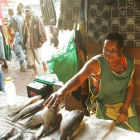
Woman selling fish in market, Zambia
Policies that improve access to ICTs should benefit Zambia's rural populations, such as female market traders
Flickr/The WorldFish 

This policy brief, published by Panos London, examines Zambia's successes and limitations in using information and communication technologies (ICTs) for development, and suggests how the country can maximise future progress.
The Zambian government has supported ICT use based on their ability to create wealth and improve education, agriculture and health services.
Successful ICT projects include an SMS service, run by the Zambia National Farmers Union, which connects small-scale farmers directly to buyers and provides daily price alerts for local produce. The service helps to ensure farmers achieve the best price without a need for third-party agents.
But several challenges have limited the impact of this technology, says the author, David Souter. Whilst mobile phone use has rocketed, the fixed-line telephone network — the country's principal means of Internet access — has failed to keep up, and is largely limited to urban and industrial areas.
Zambia also suffers from inadequate connections to international communication infrastructures, making Internet access expensive. The costs of line rental and hardware means that home Internet access is out of reach for most Zambians.
The lack of a ministry dedicated to ICT has delayed the implementation of a national policy, which was adopted in 2006. And inflexible regulations make it difficult for service providers to operate and introduce new services.
These constraints, amongst others, must be addressed to improve ICT access for all Zambians, in particular those in rural areas, such as small-scale farmers and female market traders, says Souter.
A key step is to reduce consumer costs. This can be achieved by improving ICT infrastructure, in particular the fibre optics network, or using tax breaks to increase access to cheaper hardware and software.
The government must also develop a more organised and effective ICT strategy based on consultation with partners, including local stakeholders and the private sector. Public-private partnerships should have a key role in building infrastructure and coordinating network installations to reach areas that remain underserved.
Widespread awareness campaigns should be rolled out to improve ICT literacy, especially important in reducing the 'digital divide' between urban and rural communities.
It is crucial that ICT programmes are not just technology driven, says Souter. Policymakers need to learn from experience showing that projects are much more successful when they begin on a small scale, are locally run and focus on meeting the needs of communities.

This policy brief was written by David Souter from Panos London, UK.

1st article, International.

How will ICT change the future of education?

Educators from Malaysia, Australia and India foresee a future in which digital books, hybrid mobile computers and touch-screen writing tablets will replace the text book, chalk and blackboard, according to a series of FutureGov interviews on how technology will change the future of education.

Photos


Emeritus Professor Jonathan Anderson, Flinders University of South Australia, predicts that knowledge in the form of books and printed matter will rapidly become digitised. Today, full text of over seven million books can be accessed through Google Books. This number is growing quickly as Google expands its digitisation effort with international associations, publishers and authors. Companies such as Amazon.com and Sony are also contributing to this development.
Many libraries in Asia Pacific are aggressively digitising content. The National Library in Kolkata – the largest library in India – is going through a massive digitisation effort. “We have digitised 9140 books and converted close to 180,000 records into machine-readable formats last year,” said Asesh Ghatak, Library and Information Officer, National Library, Belvedere, Kolkata in India.
New mobile devices will emerge and take on a great role in the way students learn. “We are likely to see a convergence of mobile and PC technologies as rival chip manufacturers enter each other’s territory,” explained Anderson. He predicted that smart phones will become more like computers and vice versa.
Dr Norrizan Razali, Senior Manager, Smart School Department, Multimedia Development Corporation in Malaysia agreed. “One of the key emerging technologies that will transform schools is mobile devices. Hybrid devices which are a mix of mobile phones and personal notebooks,” she added. Razali believed that such a mobile device will make a great impact to students, especially in rural Malaysia. However, it must first be durable and affordable – below RM 1000 (US$292) each.
The increasing pervasiveness of cloud computing will support such a device. Cloud enables operating systems to be trimmed down and applications to rely less on end-clients for processing power and memory space. Also, touch-screen technology will become the key method students interact with ICT devices.
“Such a device will be held in the hand like a mobile phone but it will have a larger surface, something like a writing tablet. It will be used for all kinds of communicating – browsing the internet, emailing, reading books and other materials online, phoning and texting, and social networking with friends and colleagues,” Anderson elaborated.
Social networking sites such as Facebook and Twitter will continue to rule students’ time. According to a recent Australian study, Facebook was the fourth most visited site. On average, users spend an average of 26.5 hours each week online, and a quarter of that time – 6.5 hours – is dedicated to Facebook. Visits to Twitter increased 1000 per cent compared to the year before.
While it is not easy to spell out the implications for education, Anderson advised that educators need to keep abreast of the latest ICT developments and echoed the need for teachers to be brought up to speed on new technology.

5th article, Malaysia.

 TRENDS: 3-D printing comes home

 By : Izwan Ismail

If you think producing a product prototype at home is expensive, think again. Izwan Ismail says the age of ’personal manufacturing’ has arrived.

.
The UP! Mini 3-D printer in printing mode.
BUSINESSMAN C.H. Poh is playing with his five-year-old son at home when his toy Transformers accidently breaks an arm.
No cause for alarm. Poh takes the broken arm, measures it and computes the details into a special 3-D design software on his notebook.
Once the 3-D drawing is done, he connects his notebook to a portable 3-D printer via a USB cable.
Poh presses the print command and three hours later, the model of an arm that resembles the original one is produced.
What Poh needs to do is just colour it accordingly, and attach it back to the robot.

PORTABLE
Thanks to the advancement in technology, 3-D printers are now accessible to home consumers.
Poh, who distributes 3-D printers for home and small businesses, says many of the devices are portable and affordable.
“The UP! Mini and UP! Plus, for example, are among the first 3-D printers for homes that are available in Malaysia. Now you can do small product prototyping at home.”
Poh himself uses the UP! Mini at home to make toys, replacement parts, and decorative stuff for his son and wife.
“The UP! printer works like a normal inkjet. The only difference is that it takes a longer time to print (as it prints in 3-D). Besides that, it doesn’t print in the normal picture format like .JPG, but a 3-D file format called stereo lightography or .STL.”
And unlike the inkjet printer, the 3-D printer uses a plastic wire-like material as their “ink”, called ABS.
“The ABS is fed into the printer’s head, where it will be melted at 260-degree Celsius while printing,” says Poh.
The printer will print from the base and up until it finishes.
Poh says with such printers, the economies of scale no longer applies.
“If before this you have to produce prototype products in 10 or 20 units, now you can just print one and the cost is just RM20 per product compared to RM3,000 in the past,” he says.

APPLICATIONS
Since the new generation 3-D printers are meant for home and small business use, their applications are limitless.
Users are not just limited to printing or producing prototypes, but just about anything that comes to mind.
The UP! printer comes with a software called UP! 3-D layout software and a driver, but users can also get for free 3-D designs for printing at websites like www.thingiverse.com where people share their 3-D design files.
Poh says while one can purchase professional design software AutoCAD and AutoDESK pro, freeware like 3-DTin.com and SketchUP are also available on the Net.
UP! Plus is priced at RM5,000 while the UP! Mini goes for RM3,000.
The UP! Plus has a bigger platform size of 140mm x 140mm x 135mm height with better resolution of 0.2mm in layer thickness, while the UP! Mini measures 120mm x 120mm x 120mm. It’s resolution is 0.25, which is slightly more coarse than the UP! Plus.

4th article, Malaysia.

TOP PICKS: Extreme gadgets

By : Izwan Ismail

If you are into extreme and outdoor sports, Izwan Ismail lists some gadgets that can help you experience the best possible adrenaline rush
.
GoPro HD Hero2
1.
Capture and share your action on the GoPro HD Hero2 camera. It can be easily mounted on your sports gear, is waterproof up to 60m and boasts a 170-degree wide-angle lens. The GoPro HD Hero2 offers 30 fps 1080p video and an 11 megapixel still photo capture. Available at www.funsportz.com for RM1,299.

Suunto Core
2.
This watch gathers a range of data to help you navigate your way through the wilder parts of the world. It has an altimeter, barometer, compass depth meter and watch features which will help you measure altitude difference, display current sea level pressure, etc. The weather trend indicator enables you to quickly check weather conditions. Available at www.funsportz.com from RM1,389 to RM3,199.

Garmin 60CSx
3.
If you’re worried about losing your way in an unfamiliar track or jungle, take the Garmin 60CSx along. It comes with a removable microSD card, high-sensitivity GPS receiver, barometric altimeter and electronic compass. The device offers high-sensitivity receiver for improved satellite reception, even when you are deep in the jungle or canyon. Available at www.funsportz.com for RM1,500.

SteriPen
4.
Clean drinking water will not be a problem with this “pen”. Its water purification is done by harnessing the power of ultraviolet light technology. Just switch it on and watch the SteriPen shine its purifying light, destroying illness-causing microbes in water so that you can drink with confidence. Available at www.funsportz.com for RM399.

Power Monkey
5.
The Power Monkey-eXplorer portable charger has proved to be an invaluable gadget, providing essential power in the most remote locations. Incorporating the solarmonkey solar charger, the powermonkey-eXplorer lets you charge anytime, anywhere. It is compatible with most mobile phones, iPods, iPhones, MP3 / MP4, PDAs and portable games consoles. Available at www.funsportz.com for RM329.

Philips ShoqBox speaker
6.
This rugged, portable speaker is built to endure an active lifestyle. Compact and easy to carry around, it features robust rubber casing, Bluetooth connectivity, and a rechargeable lithium battery that lasts up to eight hours. A built-in microphone turns the ShoqBox into a speakerphone, and a motion sensor lets you swipe your hand to skip or pause tracks or join two or more ShoqBox speakers together to listen to music in stereo. Available at Amazon.com for US$179.99 (RM566.15).

Night Owl Nexgen
7.
If you’re out camping in the woods, it’s good to have a night vision binoculars. The Night Owl Nexgen binoculars has an added feature of two 5X lens for better close up viewing. It also features exclusive Steel Stringer System for precision and control and a built-in infrared illuminator for clear and bright viewing in complete darkness. Available at Amazon.com for US$475.16.

Liquid Image Explorer
8.
This 5.0MP underwater digital camera mask keeps your hands free as you swim. The manufacturer claims this is the world’s only swim mask that has an integrated waterproof digital-video camera and the ability to take pictures deep in the water. The mask operates to a depth of 4.5 metres and eliminates the need to carry an underwater camera. It is ideal for snorkelling and swimming. Available at Amazon.com for US$85.

Blue Solar backpack
9.
This backpack combines four parts — bag, solar cell panel, battery box and adapters — and can be used to charge most portable electronics mobile phones, iPods, PDAs, and GPS. It is comfortably designed with extra width and cushion for shoulder belts. Ideal for backpackers, sports fans and outdoor buffs. Available at Amazon.com for US$129.99.

LED Lenser H14
10.
The H14 is an innovative head lamp with astonishing luminosity. The light is exceptionally bright and the lamp can be easily fastened to your belt or mounted on the handlebars of a bike. It also comes with an extra strap for extra stability when moving around. Available at Amazon.com for US$72.99.

Wednesday, 4 July 2012

3rd article, Malaysia.


By ZUHRIN AZAM AHMAD
zuhrinazam@thestar.com.my

CYBERJAYA: Huawei, a global leading ICT solution provider, expects to invest another RM90mil in the next few years to consolidate Malaysia's position as a world-class ICT training hub.
The investment would be mainly for equipment and facilities of new technologies at its Malaysia Global Training Centre (MGTC) located here.
Huawei Technologies (M) Sdn Bhd deputy managing director Foo Fang Yong said ICT sector needed a continuous investment as the sector developed rapidly.
“It is a non-stop developing sector where we see new inventions or improved-version technologies almost on a daily basis.
“We invested RM90mil in 2010 when we started the MGTC and we could expect a similar amount to be invested as we must keep abreast with current technologies,” he said after the launching of the centre by Prime Minister Datuk Seri Najib Tun Razak yesterday.
The MGTC is Huawei's third in the world and first outside its homebased China.
In conjunction with the launch, Huawei also signed an agreement with 10 local universities that would initiate the setting up of 10 Huawei University Training Labs under MSC Malaysia MyUniAlliance (Huawei) programme in each of the universities.
The initiative is to further cultivate the interest of students in the field of next generation ICT technologies such as cloud Computing and Fixed Broadband.
Huawei senior vice-president Victor Wang said the key objective of the initiatives was to train and develop 10,000 ICT local professionals by 2016.
He sai d the initiatives would be further supported by the introduction of MSC Malaysia-Huawei Scholastic Awards, aimed to help cultivate interest among graduates to acquire the necessary skills to enter the ICT sector.
Last year, Huawei which has a work force of 150,000 people worldwide earned US$35bil. Its clientele includes 45 of the world's top 50 telecommunication operators.

2nd article, Malaysia.


Malaysia: ICT education for a “creative society”
Malaysia Higher Education Ministry is studying how to develop a creative and innovative Malaysian society through human capital development. 

The ministry is planning to work with Microsoft in unearthing creative and innovative students of tertiary institutions in the area of ICT and with Shell Malaysia in energy saving.
Its minister Datuk Seri Mohamed Khaled Nordin said the study to produce creative, innovative human capital was started last year by the Malaysian Invention and Design Society (MINDS), Universiti Teknologi Mara and Malaysian Design Council. This study will be looking at programmes by government agencies that could contribute to the creation of “innovative human capital”.

We hope when the study is completed, expected this year, we will be able to draw up a national blueprint in this context,” he said. “Malaysia wants to move away from a resource-based economy to one generated by innovations with the existence of an innovative society, which will indicate that the country has reached developed-nation status,” he said.
Nordin said creativity and innovations were vital for a country and studies had shown that technological innovations contributed to higher productivity, Gross Domestic Product, economic growth and improved standard of living.

1st article, Malaysia.

Malaysian ICT to grow as economy recovers, says minister

Malaysia’s information and communications technology (ICT) sector could grow by 7% if economic recovery and business confidence continues, says Malaysia’s Science, Technology and Information Minister Dr Maximus Johnity Ongkili. ICT contributed as much as RM48 billion (US$15.8 billion) or 10% of Malaysia’s GDP in 2007, but only RM40 billion ($13.2 billion) last year.
Before the financial crisis ICT in Malaysia had been projected to grow 10% per year, one of Asia’s fastest, he said.
Ongkili made his comments at Mimos, a major R&D center for ‘frontier technologies’ and advisor to the Malaysian government, which focuses on technology that can be commercialized for growth. Mimos yesterday held a ceremony to transfer technology platforms to three local companies to be developed for market by the private sector: Jaring Communications Sdn Bhd, Mutiara.com and Smart Computing Sdn Bhd.
Six other Malaysian companies also signed deals to licence and develop Mimos’ technology: Disability Solutions Sdn Bhd, Alam Teknokrat Sdn Bhd, Innovision Business Solutions Sdn Bhd, Phytofolia Sdn Bhd, Quantum Beez Sdn Bhd and Fabtronic Sdn Bhd.
131 ‘WiFi Villages’ for Sandakan
Meanwhile, in Malaysia’s far eastern city of Sandakan, the Malaysian Communications and Multimedia Commission (MCMC) said it was halfway through a project to provide minimal-charge wireless internet access to 131 area villages, enabling urban and rural populations equal access to online services. MCMC has also distributed 49,800 netbooks to students in Sabah province on Borneo under the 1Malaysia project.

source & articles: The Star online, Mimos